Fall Seeding in San Diego: A Guide to Cool-Season Growing
September 2, 2024

At our summer pilgrimage to Johnny’s Selected Seeds, Brijette Pena, founder of San Diego Seed Company, posed this question to Johnny’s head of Research & Development: “What do you do in the winter?” She was referring to the many months in Maine when the ground was frozen solid and nothing much wanted to grow, not even in high tunnels. She was genuinely curious, though he seemed a little put off by the question and listed a myriad of chores, research projects and travel assignments.
She asked because, in San Diego, the thought of a season without growing seems inconceivable. In fall, while other regions are packing away their gardening equipment and putting their garden beds to bed, San Diegans are busy sowing seeds and nurturing cool-season favorites. I call it a second spring because, like spring, it’s a transitional time when temperatures are typically moderate. It’s also when I need to psyche myself up for the spring season-level of work required to ensure incredible fall harvests and gorgeous December blooms.
In fall, while other regions are packing away gardening equipment and putting garden beds to bed, San Diegans are busy sowing seeds and nurturing cool-season favorites.
A Counterintuitive Dance with Nature
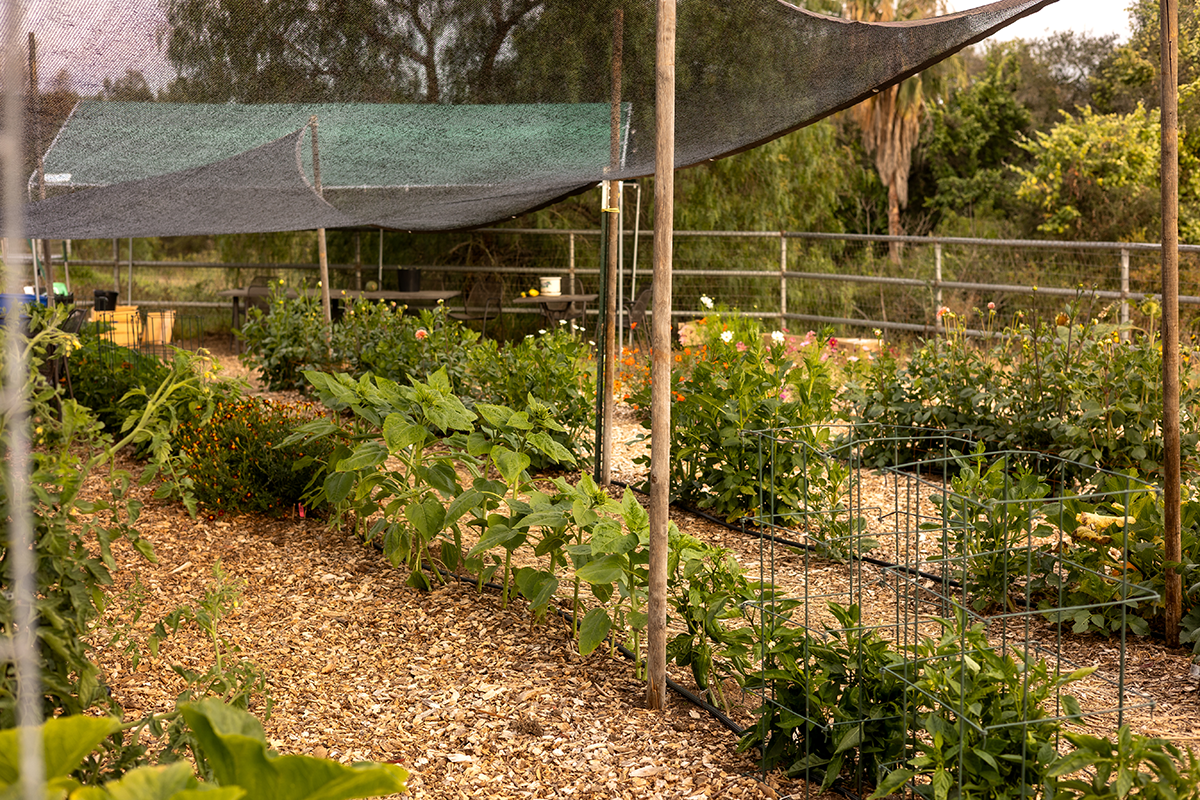
Right now, my garden beds are in the middle of this hefty transition. Near rows of basil, peppers and tomatoes soaking in the late summer sun, I’m nurturing seedlings of cool season staples like arugula, beets, broccoli, cabbage, cauliflower, cilantro and spinach. I spent Labor Day direct sowing carrots (‘Romance’ pelleted carrots) and sunflowers (‘Starburst Greenburst DMR’) after removing some of our spent heirloom tomato vines.

Flowers are especially interesting when it comes to fall in San Diego. I can’t count the number of times I’ve read Pat Welsh’s Southern California Organic Gardening, especially the chapter on September. She says that “September is the first month in which you can plant cool-season annual and perennial flowers. The earlier you get them into the ground, the more likely you are to get them to bloom before Christmas.” This idea delighted me–having an armful of fresh flowers at Christmas–so I’m finally going to give it a try. Welsh notes that the best flower crops to seed in September are African daisy, calendula, cineraria, snapdragons, stock, sweet alyssum, sweet peas, violas and wildflowers. To this I’m adding ranunculus. My corms from the spring are currently sitting in a bucket of water on my garden desk to plump up so I can pop them into some beds.
Flowers to seed in September: African daisy, calendula, cineraria, ranunculus, snapdragons, stock, sweet alyssum, sweet peas, violas and wildflowers.
In addition, I’ve seeded cosmos. This may sound odd, but the Johnny’s Selected Seeds Tech Sheet on Cosmos says that cosmos is a short-day plant that flowers most profusely on days with less than 14 hours of sunlight. This photoperiod preference is most evident in young plants, which means in my area you want your cosmos to hit maturity before mid-May or after mid-July for the greatest number of blooms. This is another area where San Diego differs from other regions, at least those further from the equator, which have a larger variance in the hours of daylight throughout the year. This is another experiment–I don’t know how these warm season crops will do moving into the fall, but several seedlings went into the ground this weekend.

Using AI for Garden Management
I also like to use this time of year to assess, reflect and prep the garden for the coming months. And in the age of generative artificial intelligence (AI), this has become much easier. A week ago, I walked through the garden with my iPhone and its Recorder app and simply talked about and recorded what I observed. When I got back to my desk, I uploaded this audio recording into Microsoft Word and asked it to transcribe the audio file. Then, I took that text and uploaded it into an AI program and asked it to distill the top five takeaways from my garden ramblings. It prioritized my most important tasks and distilled the biggest successes and failures of the season.
Here are a few takeaways that have turned into To Do’s:
- Clear out tired summer crops, including a few tomato plants that have given their all
- Replenish the soil with generous helpings of compost and mulch to ensure a nutrient-rich foundation for the new arrivals
- Fertilize established plants, giving them a boost to carry them through the cooler months. This includes the final round of cucumbers and squash that are about two weeks from bearing fruit
- Use the cool season to establish perennial herbs like feverfew and yarrow
- Revise garden bed layouts to allow for easier access for pruning and fertilizing

A Garden in Perpetual Motion
So, while other parts of the country are winding down, my Bonsall garden is gearing up for its second act. It’s a constant cycle of growth, renewal and adaptation—a testament to the unique rhythm of Southern California. This fall, I’m experimenting more and pushing the boundaries of what’s considered “seasonally appropriate.” I’ll keep you posted on what I learn because in San Diego, the growing never really stops–and neither does the learning.


I really enjoyed reading about your fall garden. You’re the best writer. Thank you for sharing with us all.
Author
Thank you! I appreciate the comment and encouragement!
Thanks for encouraging me to take out Pat Welsh’s book. I love that one, but it’s deep within my bookshelf. Digging it out tonight. Years ago I took my mom on a garden tour in Del Mar. Pat Welsh’s garden was included, and my book got a signature. What a TREAT and pure inspiration. Thank you for being another source of inspiration and education for me. Some of your seedlings are reaching maturity in the school garden. Butternut squash are vining all around now and the Rudbeckia and Scabiosa are still enchanting me! I’m so excited to find this blog page.
Author
That is so wonderful to hear about the school garden! I love that you are creating that space with the children. And I can’t believe you actually got to see Pat Welsh’s garden and to get her signature! I feel like her book is one of the few real resources for Southern California gardeners. I’ve been purchasing some books, including ones that are out of print, but that one still tops my list. The other book I’ve been reading is from a former LA Times garden writer called 52 Weeks in the California Garden. He starts the book in August or September–I can’t remember which–because that’s really the start of our growing season. So I guess for the author, fall is not the second spring but the first spring for us!
Thank you for sharing your experiences of gardening in Southern California. I found your website as I searched for “growing stock from seed in San Diego”. I just planted some stock seed I saved from last year and was second guessing myself on how to do it so was on the hunt for more advice. I enjoyed reading through all your blog posts and I can relate so well to the what you share about our unique growing seasons here. I am big fan of Pat Welsh too! Thanks again.
Author
Thank you! And I welcome any input/insight/knowledge you have too! We’re all piecing together this So Cal growing experience. It IS so unique and also a rare opportunity. 🙂